Humanoids and Legged Robots
What a Humanoid Robot Costs to Build, Part by Part
Where the money goes in a humanoid: actuators dominate at 40 to 55 percent, hands are the most expensive part per kilogram, and the published prices span a factor of ten.
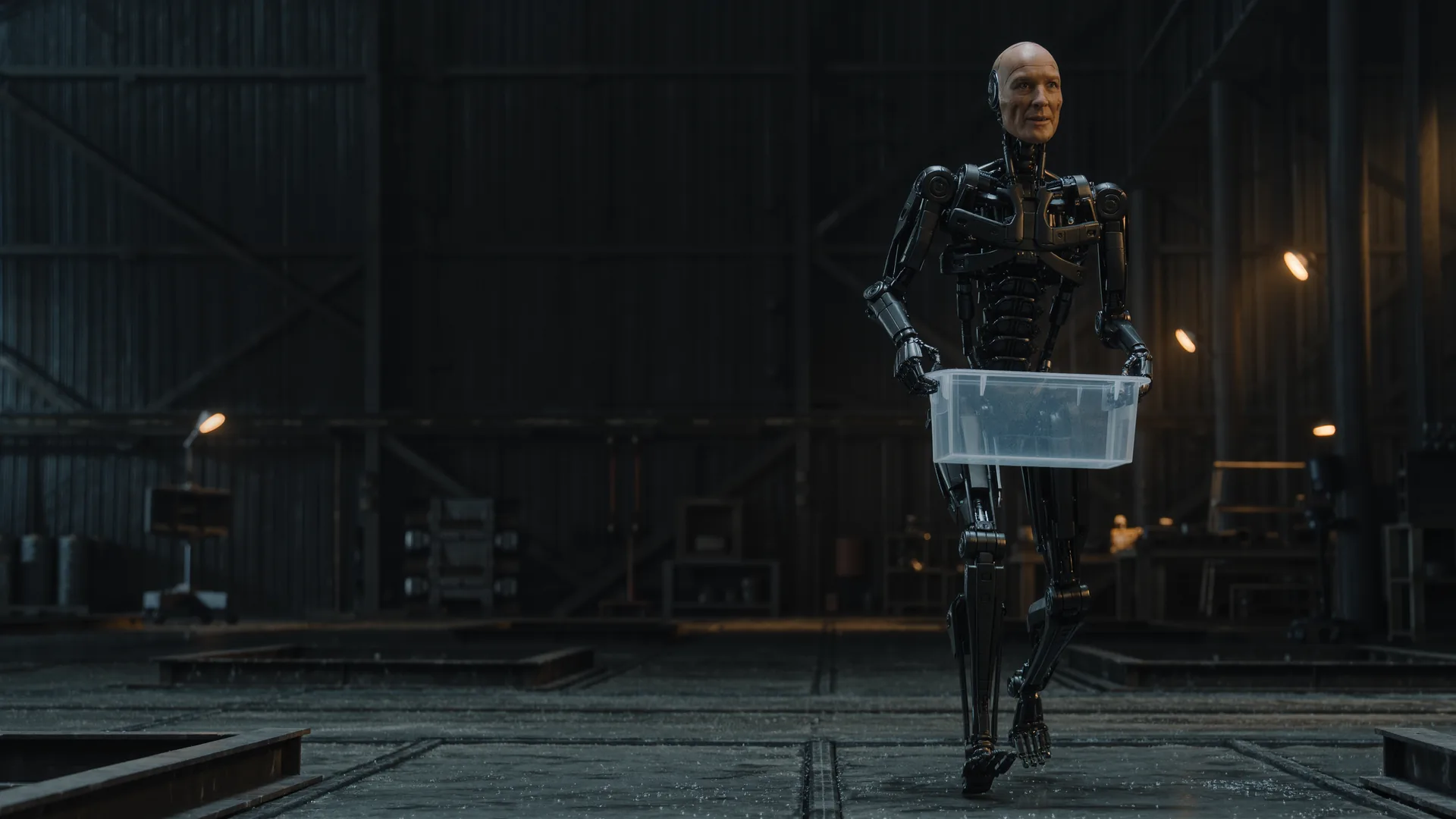
Actuators are 40 % to 55 % of the bill of materials, and a full-size humanoid has 25 to 45 of them. Published list prices span a factor of ten, from 13,500 US dollars for a compact research platform to figures in the low hundreds of thousands for full-size machines with dexterous hands. The spread is real engineering, not branding: hands, torque density and battery capacity each multiply cost.
Where the money goes
| Subsystem | Share | Cost driver |
|---|---|---|
| Leg and hip actuators | 22 to 30 % | High torque, high bandwidth, 10 to 14 joints |
| Arm and torso actuators | 14 to 22 % | Lower torque, more of them |
| Hands | 8 to 20 % | Miniature actuation, tactile sensing, tendon routing |
| Battery and power electronics | 8 to 12 % | Capacity, discharge rate, safety systems |
| Compute and sensing | 7 to 12 % | Inference accelerator, cameras, IMU, encoders |
| Structure and shells | 6 to 10 % | Machined and composite parts, low volume |
| Wiring, cooling, assembly | 6 to 10 % | Labour intensive, hard to automate |
The hands line is the one that varies most. A simple two-finger or three-finger end effector costs a fraction of a five-finger hand with 8 degrees of freedom each and tactile sensing in every fingertip. One current commercial humanoid publishes 44 total degrees of freedom of which 16 are in the hands, and that hand pair alone can approach the cost of an entire leg.
What the market actually charges
| Model | Published price | Notes |
|---|---|---|
| Compact research humanoid, 1.32 m | 13,500 USD | 23 degrees of freedom, 2 kg per arm, about 2 h runtime |
| Full-size research humanoid, 1.8 m | tens of thousands | Research configuration, limited hands |
| Full-size logistics humanoid | not published | Sold through service agreements |
| Commercial automotive fleet | ≈ 25 USD per robot-hour | Priced as an operating cost, not a capital purchase |
The shift to hourly pricing is the significant commercial development. At roughly 25 US dollars per robot operating hour, a machine running 4,000 hours a year bills 100,000 US dollars annually, which is comparable to a fully loaded shift position in several markets. It also transfers uptime risk to the supplier, which is the correct place for it while reliability is still improving.
Why prices should fall, and why slowly
- Actuators are the lever. They are the largest share and the most volume-sensitive. Precision gearboxes remain a concentrated supply base, which is the same bottleneck that constrains industrial robot builders.
- Compute follows the general market and is already the cheapest path to improvement per unit of capability.
- Structure benefits from volume as machined parts move to castings and mouldings, but only above thousands of units per year.
- Hands do not scale easily. Miniature actuation and tactile sensing are precision assembly problems, and assembly labour is the part of the bill that resists automation most stubbornly.
A useful comparison: industrial robot prices fell substantially over decades, driven by volumes that reached hundreds of thousands of units per year. Humanoid volumes are currently in the low thousands worldwide. The cost curve is real but it starts from a much earlier point on the same road.
The cost that is not the robot
As with every robot category, the purchase price understates the deployment. A humanoid needs charging infrastructure, a safety assessment for the specific site because no product-level standard covers free-walking machines, task programming or demonstration data collection, integration with the customer's systems, and on-site support during the first months. For early deployments these have often exceeded the hardware cost, which is one reason service and hourly models have appeared so early in this category.
Frequently asked questions
How much does a humanoid robot cost?
Published prices range from about 13,500 US dollars for a compact research platform to figures in the low hundreds of thousands for full-size machines with dexterous hands. Several commercial programmes do not publish a price and sell service agreements instead.
Which part is most expensive?
Actuators, at 40 % to 55 % of the bill of materials across 25 to 45 joints. Hands are the most expensive per kilogram, because miniature actuation and tactile sensing are precision assembly problems.
What does hourly pricing mean in practice?
At roughly 25 US dollars per robot operating hour, a machine running 4,000 hours a year bills about 100,000 US dollars annually. It converts a capital decision into an operating one and transfers uptime risk to the supplier.
Will humanoid prices fall quickly?
They should fall, but from a low volume base. Actuator cost is the main lever and depends on precision gearbox supply, which is already a concentrated bottleneck for industrial robots. Compute falls fastest, hands slowest.
What does deployment add on top of the robot?
Charging infrastructure, a site-specific safety assessment because no product standard covers free-walking humanoids, task programming or demonstration data collection, systems integration and early on-site support. In early deployments these have often exceeded the hardware cost.
Sources
- Unitree G1 entry in the ROBOTS guideIEEE Spectrum, published price, degrees of freedom and payload
- The Robot Report, humanoid commercial coverageReporting on hourly pricing models and fleet contracts
- World Robotics 2025, industrial robotsInternational Federation of Robotics, volume context against industrial robot production