Humanoids and Legged Robots
Humanoids Have No Safety Standard Yet. What Now?
No published standard covers a free-walking humanoid working near people. Here is what the three adjacent standards do cover, and the route deployments are actually taking.
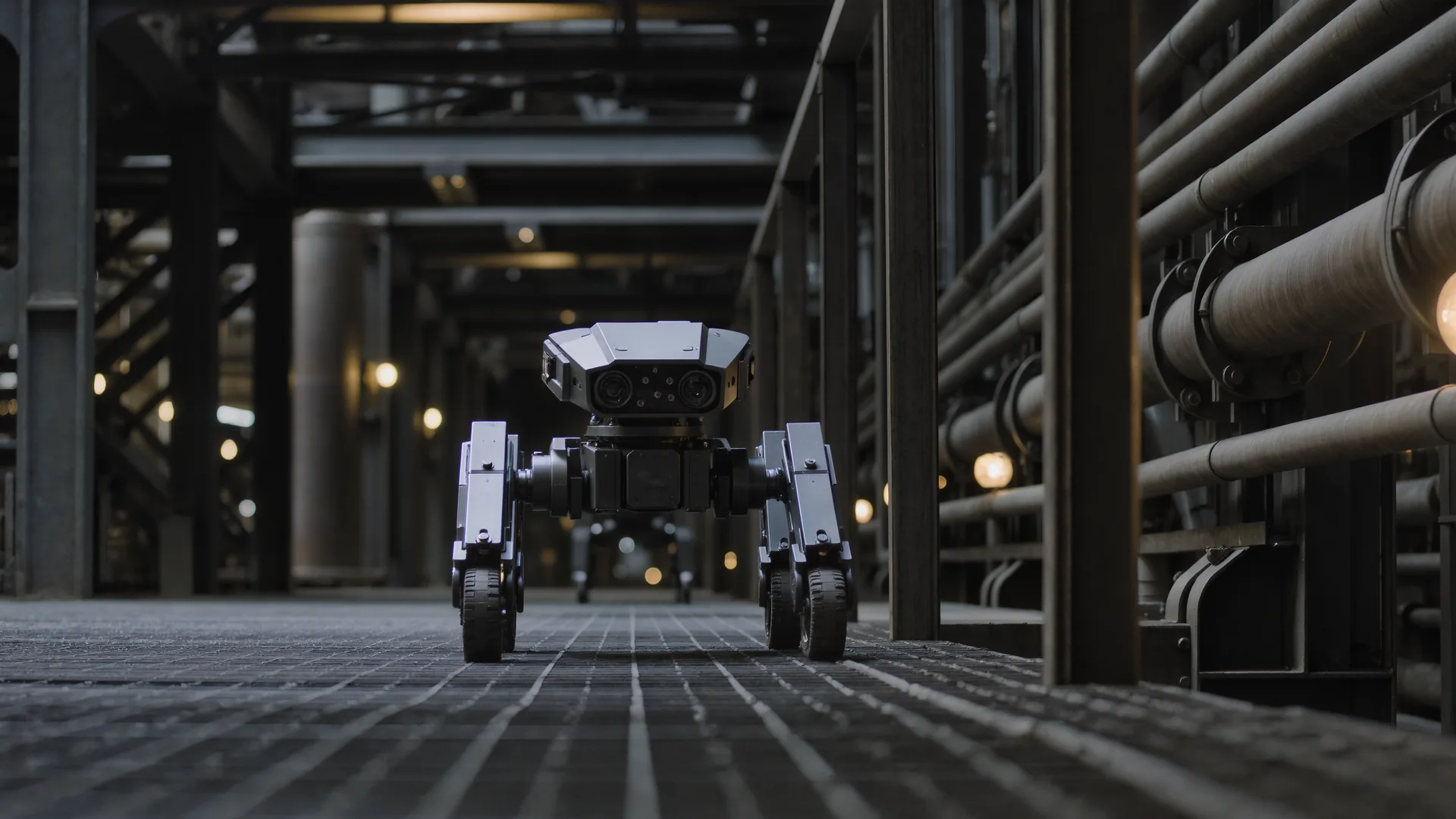
There is no published standard for a free-walking humanoid working near people. ISO 10218 covers industrial robots in a defined workspace, ISO 3691-4 covers driverless trucks, and ISO 13482 covers personal care robots. A 60 to 75 kg legged machine that can fall falls between all three, and deployments have proceeded through site-specific inspection of the installation rather than product certification.
What each adjacent standard covers, and where it stops
| Standard | Covers | Why it does not fit a humanoid |
|---|---|---|
| ISO 10218-1 and -2:2025 | Industrial robots and robot applications | Assumes a defined workspace and a fixed base; no provision for a machine that walks or falls |
| ISO 3691-4 | Driverless industrial trucks | Assumes wheeled travel with predictable stopping distance; no balance or fall hazard |
| ISO 13482 | Personal care robots, including some legged types | Explicitly excludes robots used as industrial equipment |
ISO 13482 is the closest fit conceptually, since it does address legged mobile servant robots and includes fall provisions. Its scope, however, is personal care, which excludes industrial application, so a humanoid moving totes on a factory floor is outside it.
The route deployments are actually taking
- Site-specific field inspection. A nationally recognised testing laboratory inspects and labels the installation at the customer site. One such inspection was completed at a live customer site in late 2025 and is widely cited as a first for the category. It certifies that installation, not the robot as a product, so it does not transfer to the next site.
- Separation by default. Most production deployments keep the robot in an area people do not routinely enter, using the same zoning logic that governs any industrial cell. That converts an unsolved problem into a solved one.
- Speed and force limitation borrowed from ISO 10218. Applying contact limits to the arms while treating the base separately is a common pragmatic approach, though it does not address the fall hazard.
- Fall mitigation as a designed function. Detecting loss of balance, protecting the payload, and choosing a fall direction are engineering measures a risk assessment can credit even without a standard to reference.
The three genuinely unsolved questions
- How is a fall assessed? Biomechanical contact limits describe a robot striking a person under controlled conditions. A 70 kg machine toppling is a different energy regime, and there is no agreed test for it.
- What performance level applies to balance? Balance control is safety-relevant, yet it is implemented with high-rate optimisation or learned policies whose failure modes resist the analysis that functional safety assessment expects.
- How is a learned policy validated? An analytical controller has a provable stability region. A policy trained in simulation has an empirical one, and no accepted method exists for certifying it.
Standards work is under way in several bodies, and a dedicated framework is widely expected. Until it is published, anyone deploying is building the argument themselves, which is why so much early work is happening with a small number of large customers who can carry that engineering effort.
What to require if you are buying
- A written risk assessment covering walking, standing, carrying, falling and manual intervention.
- The safety concept for the base, stated separately from the arms.
- Evidence of fall behaviour testing, including what the robot does with a payload.
- Which functions are safety-rated, at what level, and how that was verified.
- Confirmation of whether any certification is product-level or site-specific.
- The plan for revalidation when the software is updated, since a policy change alters behaviour.
Frequently asked questions
Which safety standard applies to humanoid robots?
None specifically. ISO 10218 covers industrial robots with a defined workspace, ISO 3691-4 covers driverless trucks and ISO 13482 covers personal care robots while excluding industrial use. A free-walking industrial humanoid sits between them.
Does that mean humanoids can be deployed without approval?
No. Machinery legislation applies regardless of whether a harmonised standard exists. In the European Union that is Directive 2006/42/EC until 19 January 2027 and Regulation (EU) 2023/1230 from 20 January 2027.
What is a site-specific field inspection?
An inspection and labelling of a particular installation by a recognised testing laboratory, rather than certification of the robot as a product. It permits that installation and does not transfer to another site.
Why is a fall so hard to assess?
Because contact limit tables describe a robot striking a person during controlled motion. A 60 kg to 75 kg machine toppling involves a different energy regime, and no agreed test method or limit exists for it.
Can a learned balance controller be certified?
Not by current methods. Functional safety assessment expects analysable failure modes and a provable stability region; a policy trained in simulation offers empirical evidence instead. Hybrid designs with analytical safety layers underneath are the current workaround.
Sources
- ISO 13482, safety requirements for personal care robotsInternational Organization for Standardization, scope and exclusions
- ISO 10218-1:2025, Robotics, Safety requirements, Part 1International Organization for Standardization
- Regulation (EU) 2023/1230 on machineryEU-OSHA legislation record, obligations that apply with or without a harmonised standard
- The Robot Report, humanoid safety coverageReporting on the first site-specific field inspection of a humanoid installation