Industrial Robotics
IP54, IP67, IP69K: What Robot Protection Ratings Mean
What each IP digit tests, which rating a robot needs for washdown, foundry or paint work, and why a high rating on the wrist does not protect the controller.
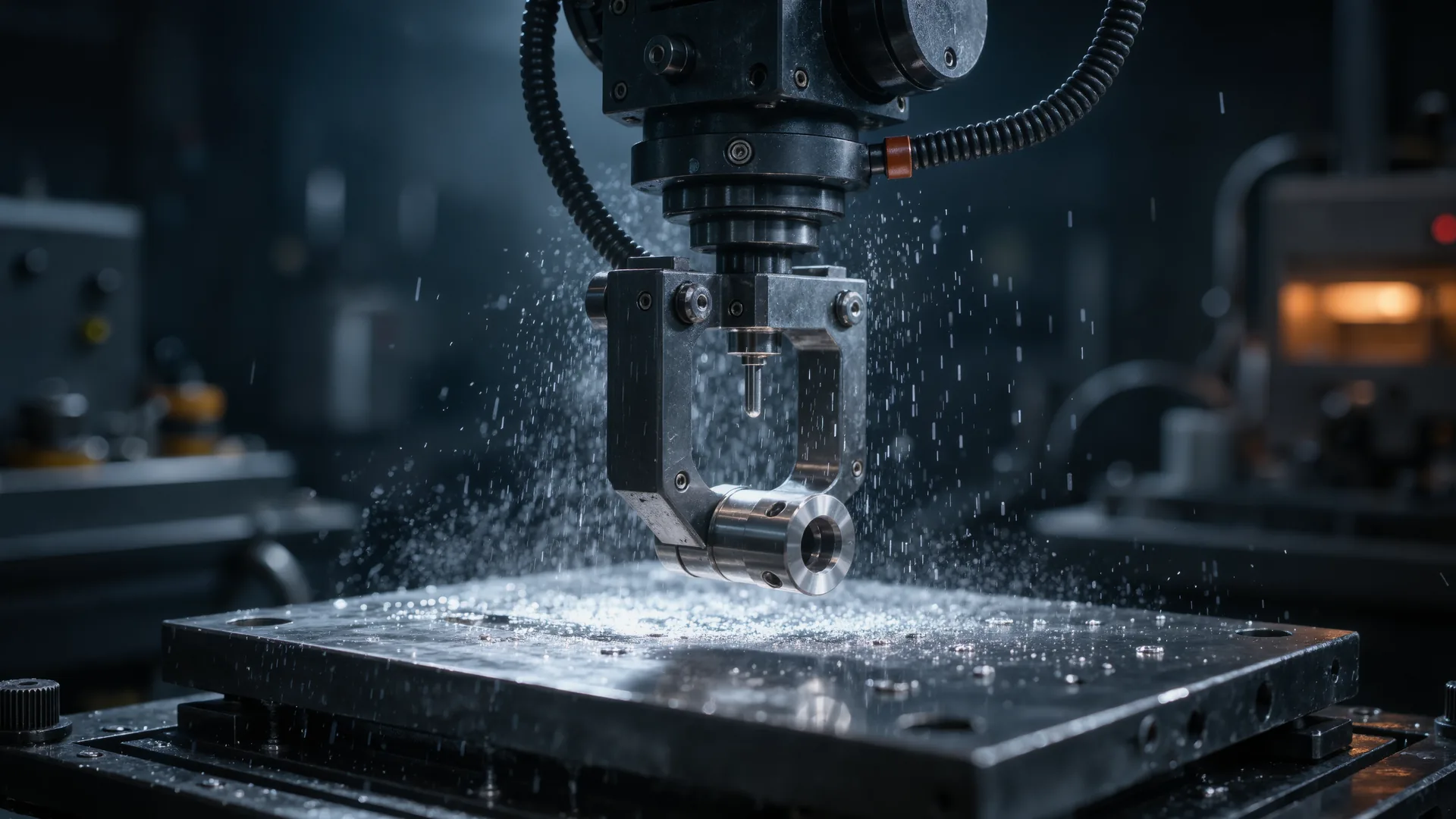
The first digit is solids, the second is liquids, and each is a separate test with a defined procedure under IEC 60529. IP54 means dust-protected and splash-proof, enough for a normal factory. IP67 means dust-tight and survives 30 minutes under 1 m of water. IP69K means it survives an 80 bar jet at 80 °C, which is the only rating that matters in a food plant with daily sanitation.
What each digit actually tests
| Digit | First digit, solids | Second digit, liquids |
|---|---|---|
| 0 | No protection | No protection |
| 1 | Objects above 50 mm | Vertically dripping water |
| 2 | Objects above 12.5 mm | Dripping water, tilted 15 degrees |
| 3 | Objects above 2.5 mm | Spraying water up to 60 degrees |
| 4 | Objects above 1 mm | Splashing water from any direction |
| 5 | Dust protected, limited ingress | Water jets, 12.5 l/min at 30 kPa |
| 6 | Dust tight, no ingress | Powerful jets, 100 l/min at 100 kPa |
| 7 | Immersion to 1 m for 30 minutes | |
| 8 | Continuous immersion, depth agreed | |
| 9K | High pressure steam jet, 80 bar at 80 °C |
Two traps hide in this table. First, the digits are not cumulative between 6, 7 and 8: an IP67 device is not automatically resistant to a pressure jet, because jets and immersion are different tests. Where both matter, manufacturers state both, for example IP66 and IP67. Second, the IPx9K test uses a jet of 14 to 16 l/min at 80 bar and 80 °C, applied from 100 mm to 150 mm at four angles for 30 seconds each while the part rotates. It is a sanitation test, not a weather test.
Which rating for which environment
| Environment | Minimum sensible | Why |
|---|---|---|
| General assembly, clean factory | IP54 | Airborne dust and occasional splash |
| Machine tending with coolant | IP67 wrist, IP54 body | Coolant mist concentrates at the tool |
| Foundry, die casting | IP67 plus heat protection | Fine abrasive dust, release agent spray |
| Food handling, dry area | IP65 to IP67 | Regular wipe-down, occasional wash |
| Food processing, daily sanitation | IP69K | High pressure hot detergent cleaning |
| Paint shop | Explosion protection first | Solvent atmosphere, IP alone is insufficient |
| Outdoor or wash bay | IP66 plus IP67 | Jets and standing water are separate tests |
| Cleanroom | ISO class rating, not IP | Particle emission matters, not ingress |
What IP does not cover
- Chemical compatibility. Seals rated for water can swell or harden in contact with detergents, solvents or cutting fluids. Ask for the elastomer specification, not just the IP number.
- Temperature. Ambient limits are stated separately, commonly 5 °C to 45 °C for standard arms. Foundry and cold-store work needs an explicit variant.
- Corrosion. An IP69K arm in painted steel still corrodes at chipped edges. Food plants specify stainless or epoxy-coated versions for that reason.
- Explosive atmospheres. Paint robots need ATEX or equivalent certification, which is a different framework entirely and usually implies a purged or intrinsically safe design.
- Hygienic design. Sloped surfaces, no horizontal ledges, no exposed fasteners and no hollow sections that trap water. IP69K plus poor geometry still fails an audit.
What protection costs
Moving from a standard IP54 arm to an IP67 variant typically adds 5 % to 15 % to the arm price. A full IP69K stainless or food-grade variant commonly adds 25 % to 60 %, because it involves different castings, seals, surface treatment and often a different lubricant approved for incidental food contact. Protective jackets are the cheaper route for foundry and paint work, adding a four-figure sum plus a modest payload penalty of 1 kg to 4 kg.
The comparison worth making is against downtime. A coolant ingress failure in a wrist gearbox is a several-thousand cost with days of lost production, and it recurs. Specifying the wrist one grade higher than seems necessary is one of the cheaper insurance policies in a cell budget.
Frequently asked questions
Is IP67 better than IP66?
Not automatically. IP66 tests powerful water jets and IP67 tests immersion, and they are separate tests. A device may pass one and fail the other, which is why washdown equipment is often marked IP66 and IP67 together.
What does the K in IP69K mean?
It marks the high pressure, high temperature jet test that originated in DIN 40050-9 and was later taken into IEC 60529 as IPx9. The test uses 80 bar at 80 °C, 14 to 16 l/min, from 100 mm to 150 mm, at four angles for 30 seconds each.
Does an IP69K robot need no other protection?
It still needs chemical compatibility for the detergents used, corrosion-resistant surfaces, food-grade lubricant where incidental contact is possible, and hygienic geometry with no water-trapping ledges. IP addresses ingress only.
Is the whole robot rated, or just the arm?
Often just parts of it. Wrist and forearm frequently carry a higher rating than the base, and the controller is usually rated separately and lower. Check each item against where it physically sits in the cell.
What rating do I need for coolant mist?
IP67 at the wrist is the common specification, with a lower rating acceptable at the base if it sits outside the mist zone. Also confirm seal compatibility with the specific coolant, because water resistance does not imply oil resistance.
Sources
- IEC 60529, degrees of protection provided by enclosures (IP code)International Electrotechnical Commission, definitions of every digit quoted above
- ISO 10218-1:2025, Robotics, Safety requirements, Part 1International Organization for Standardization, environmental requirements for robot design
- World Robotics 2025, industrial robotsInternational Federation of Robotics, food and beverage as a growth segment