Actuators and Mechanics
Robot Maintenance Intervals: Grease, Belts, Batteries
What an industrial robot actually needs and when, from daily checks to gearbox grease at 10,000 hours, plus the three items that cause most unplanned stops.
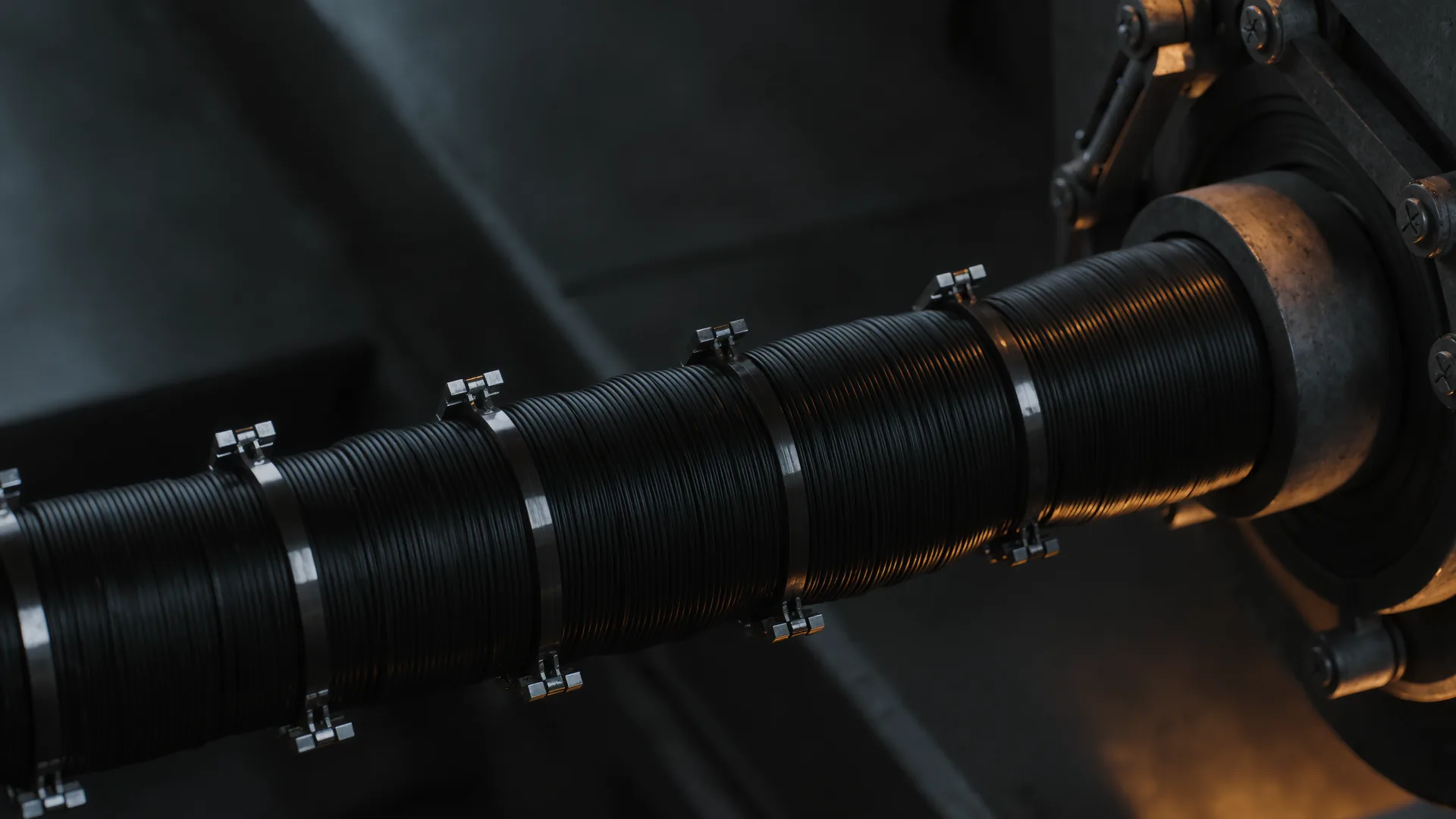
Three items cause most unplanned robot stops: cables, batteries and grease. All three are scheduled maintenance items with known intervals, which means most unplanned robot downtime is planned maintenance that did not happen. A typical industrial arm needs grease attention around 10,000 operating hours, encoder batteries every 1 to 2 years, and cable inspection monthly.
The schedule
| Interval | Task | Time | Consequence of skipping |
|---|---|---|---|
| Daily | Visual check for leaks, damage, unusual noise | 2 min | Small faults become large ones |
| Weekly | Clean the arm, check the guarding and the dress pack | 10 min | Abrasion goes unnoticed |
| Monthly | Dress pack inspection, brake test, check fasteners | 20 min | The main preventable failure class |
| Quarterly | Check backlash, verify a reference position, review error logs | 45 min | Drift becomes scrap |
| Annually | Full inspection, grease condition, cooling and filters | 3 to 6 h | Wear accumulates unmeasured |
| 1 to 2 years | Encoder backup batteries | 1 h | Position loss, remastering, downtime |
| Around 10,000 h | Gearbox grease change or top-up | 4 to 12 h | Gearbox life falls sharply |
| 2 to 5 M cycles | Dress pack replacement | 2 to 8 h | Intermittent faults, unplanned stops |
| 20,000 to 40,000 h | Balancer, bearings, gearbox overhaul as indicated | 1 to 3 days | Cascade failures |
Grease, the item that decides gearbox life
Precision reducers are lubricated for life in the sense that the grease is expected to last a stated number of hours, not forever. Grease degrades through mechanical shearing, oxidation and temperature, and hot operation accelerates all three. As a rule of thumb used across lubricants, every 10 K of additional operating temperature roughly halves the useful life.
- Follow the manufacturer's specification exactly. Robot reducer greases are specific formulations, and mixing incompatible types can cause separation and rapid failure.
- Do not overfill. Excess grease churns, heats and raises internal pressure, which pushes lubricant past seals.
- Sample where possible. Grease analysis showing metal particles is early warning of gear or bearing wear, weeks or months before noise appears.
- Shorten the interval in hot or high-duty cells. Foundry, welding and continuous three-shift operation all justify it.
Batteries and the avoidable outage
Absolute multi-turn encoders on many robots retain their revolution count with a backup battery. When it goes flat, the position is lost and the robot must be remastered, which is downtime plus a calibration procedure and, on a cell with tight fixtures, a re-verification of taught points.
The failure is entirely avoidable. Most controllers warn at low battery voltage, and replacing batteries on a two-year schedule during planned downtime costs an hour. Discovering it on a Monday morning costs a shift.
What maintenance costs against what it saves
| Item | Hours per year | Parts cost | Note |
|---|---|---|---|
| Daily and weekly checks | 12 | 0 | Absorbed into shift routine |
| Monthly inspection and brake test | 4 | 0 | Highest return per hour spent |
| Quarterly measurement | 3 | 0 | Produces the trend data |
| Annual inspection | 5 | 100 to 400 | Filters, seals, consumables |
| Encoder batteries, amortised | 0.5 | 40 to 150 | Every one to two years |
| Grease, amortised over 10,000 h | 2.5 | 150 to 600 | Two-shift operation reaches it in about 2.5 years |
| Dress pack, amortised | 2 | 400 to 2,000 | Depends on cycle rate |
| Total per arm per year | 29 | 690 to 3,150 |
Set that against a single unplanned stop. Four hours of lost production on a cell producing 400 parts an hour is 1,600 parts, which on most products exceeds the entire annual maintenance budget for the machine.
Moving from schedule to condition
| Indicator | Source | Warns of |
|---|---|---|
| Motor current per axis at a fixed motion | Controller log | Rising friction, gearbox wear |
| Motor and gearbox temperature | Controller log | Lubricant degradation, overload |
| Brake test movement | Brake test routine | Brake wear, before it fails |
| Backlash measurement | Quarterly check | Gearbox wear trend |
| Reference position deviation | Quarterly check | Mechanical shift, collision damage |
| Error and warning frequency | Controller log | Developing intermittent faults |
Most controllers already record the first two continuously, so the data exists. Trending it rather than reading it once turns maintenance from a calendar exercise into a prediction, and it is available without buying anything.
Frequently asked questions
How often does an industrial robot need maintenance?
Daily visual checks, monthly dress pack and brake inspection, quarterly backlash and reference checks, an annual full inspection, encoder batteries every one to two years and gearbox grease around every 10,000 operating hours.
Should intervals be by hours or by calendar?
By operating hours. A single-shift robot accumulates about 2,000 hours a year while a three-shift machine reaches 6,000, so calendar-based plans systematically under-service the busiest and most costly machines.
What causes most unplanned robot downtime?
Cables, encoder batteries and lubricant, in roughly that order. All three are scheduled items with known intervals, which means most unplanned downtime is deferred planned maintenance.
Can I use any grease in a robot gearbox?
No. Precision reducer greases are specific formulations, and mixing incompatible types can cause separation and rapid failure. Follow the manufacturer's specification exactly and avoid overfilling.
What should I monitor to predict failures?
Motor current at a fixed reference motion, motor and gearbox temperature, brake test movement, backlash and reference position deviation. The first two are already logged by most controllers, so trending them costs nothing.
Sources
- ISO 10218-1:2025, Robotics, Safety requirements, Part 1International Organization for Standardization, maintenance and verification obligations
- ISO 9283, manipulating industrial robots, performance criteria and test methodsReference measurements used to detect drift over time
- ISO 12100, safety of machinery, general principles for designMaintenance as part of the machine life cycle in the risk assessment