Industry and Economics
The System Integrator Market: Who Does the Real Work
Robot manufacturers sell arms; integrators build the machines that use them. How the market is structured, what integrators charge, and how to choose one without regretting it.
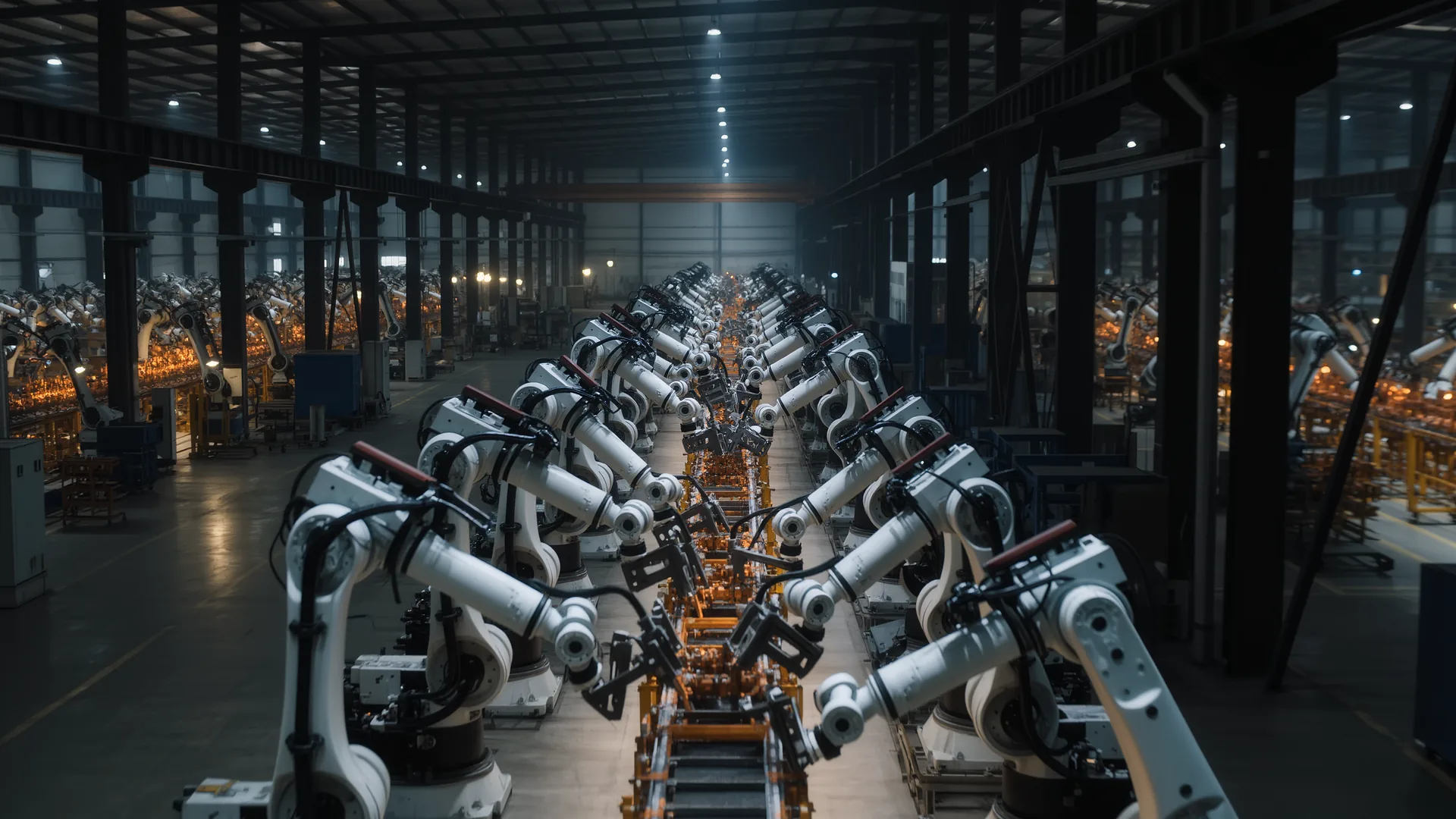
Robot manufacturers sell components. System integrators turn them into machines, and they perform most of the engineering, carry the conformity obligations and provide the support. Integration is typically 18 % to 35 % of a cell budget, more than the robot itself on complex work, and the market is highly fragmented: mostly firms of 5 to 50 people serving a region and a handful of industries.
Three tiers
| Tier | Size | Typical project | Strength | Risk |
|---|---|---|---|---|
| Large systems houses | 200 to 5,000 staff | Whole production lines | Capacity, process depth, references | Cost, slow for small work |
| Regional specialists | 5 to 50 staff | Single cells and small lines | Responsiveness, local support, price | Key-person dependency, thin documentation |
| Distributor integrators | 10 to 100 staff | Standardised cells | Fast on repeat configurations | Tied to one brand, limited bespoke work |
What integrators charge
| Activity | Days | Note |
|---|---|---|
| Concept and layout | 2 to 6 | Reach study, cycle estimate, quotation |
| Mechanical design | 5 to 15 | Fixtures, guarding, base |
| Electrical design | 3 to 10 | Cabinet, safety circuit, interfaces |
| Robot programming | 4 to 12 | Less with offline programming |
| PLC and interlock software | 3 to 10 | More with older machines |
| Workshop build and test | 5 to 15 | Before it reaches your floor |
| Site installation and commissioning | 5 to 15 | Your production time |
| Documentation and conformity | 4 to 10 | Risk assessment, validation, CE file |
| Total | 31 to 93 days | Day rates commonly 700 to 1,400 euro |
Choosing one
- Ask for a comparable reference and visit it. Not a similar industry, a similar problem. A firm that has tended lathes twenty times will tend yours better than one that has built forty palletisers.
- Ask who writes the risk assessment and who CE-marks the cell. The answer should be immediate and specific. Hesitation here predicts trouble.
- Ask for the cycle time method. A credible integrator produces a simulation with your part mass and fixture positions, separating robot motion from process wait, within a day.
- Ask what happens on a Friday at 18:00. Response time, spares held, remote diagnostics and whether support is the same people who built it.
- Ask about handover. Which documentation, which source files, which training, and whether you can modify the cell yourself afterwards.
- Check controller standardisation. An integrator working in the brand your plant already runs saves training, spares and diagnostic time for a decade.
Point five separates good outcomes from expensive ones. A cell delivered without program sources, safety configuration files and an editable fixture drawing is a cell you cannot change without the original supplier, and that dependency lasts as long as the machine does.
How integrators are paid, and why it matters
| Model | Buyer risk | Integrator risk | Suits |
|---|---|---|---|
| Fixed price, defined scope | low, if scope is right | high | Well-understood repeat cells |
| Time and materials | high | low | Research and unclear scope |
| Fixed price with a change mechanism | moderate | moderate | Most real projects |
| Two-stage, study then build | low | low | Complex or first-of-a-kind work |
| Performance-linked payment | low | high | Cells with a measurable rate target |
The two-stage model is under-used and resolves the central problem in this market. A paid study of 3 to 8 days produces a layout, a cycle estimate, a risk outline and a firm price, and it costs a fraction of the change orders that an underspecified fixed-price contract generates. It also reveals how the integrator thinks before the large commitment is made.
Reading a quotation
| Sign | What it usually means |
|---|---|
| Single lump sum, no breakdown | Scope is undefined and change orders will follow |
| Cycle time stated with no method | It was estimated rather than calculated |
| Conformity not mentioned | It will be assumed to be your responsibility |
| Part presentation "by customer" | The largest hidden cost has been excluded |
| Commissioning days unusually low | Overrun is priced into the change orders |
| No spares or support proposal | Support was not planned |
Frequently asked questions
What does a system integrator actually do?
Turns robot components into a working machine: layout, fixturing, guarding, electrical design, programming, interfacing to existing equipment, commissioning, and the risk assessment and conformity documentation for the complete cell.
How much does integration cost?
Typically 18 % to 35 % of the cell budget, which is 31 to 93 engineering days for a single-station cell at day rates commonly between 700 and 1,400 euro.
Why is integration capacity a constraint?
Because the market is fragmented into small regional firms. Robot arms are available on short lead times while integrator availability is often measured in months, so integration rather than hardware sets the pace of deployment.
What should I ask before signing?
Who writes the risk assessment and CE-marks the cell, how the cycle time was calculated, what happens on a Friday evening, and exactly which documentation, source files and training are handed over.
What is the most damaging omission?
Handover of program sources, safety configuration and editable drawings. Without them the cell cannot be modified without the original supplier, and that dependency lasts the machine's entire life.
Sources
- World Robotics 2025, industrial robotsInternational Federation of Robotics, installation volumes and application mix
- Regulation (EU) 2023/1230 on machineryEU-OSHA, the conformity obligations integrators carry
- ISO 10218-1:2025, Robotics, Safety requirements, Part 1International Organization for Standardization, integration requirements