Safety and Standards
EU Machinery Regulation 2023/1230: Deadlines and Duties
The Machinery Directive stops applying on 19 January 2027 and the Regulation applies from 20 January 2027, with no overlap. What changes for robot cells and who has to act.
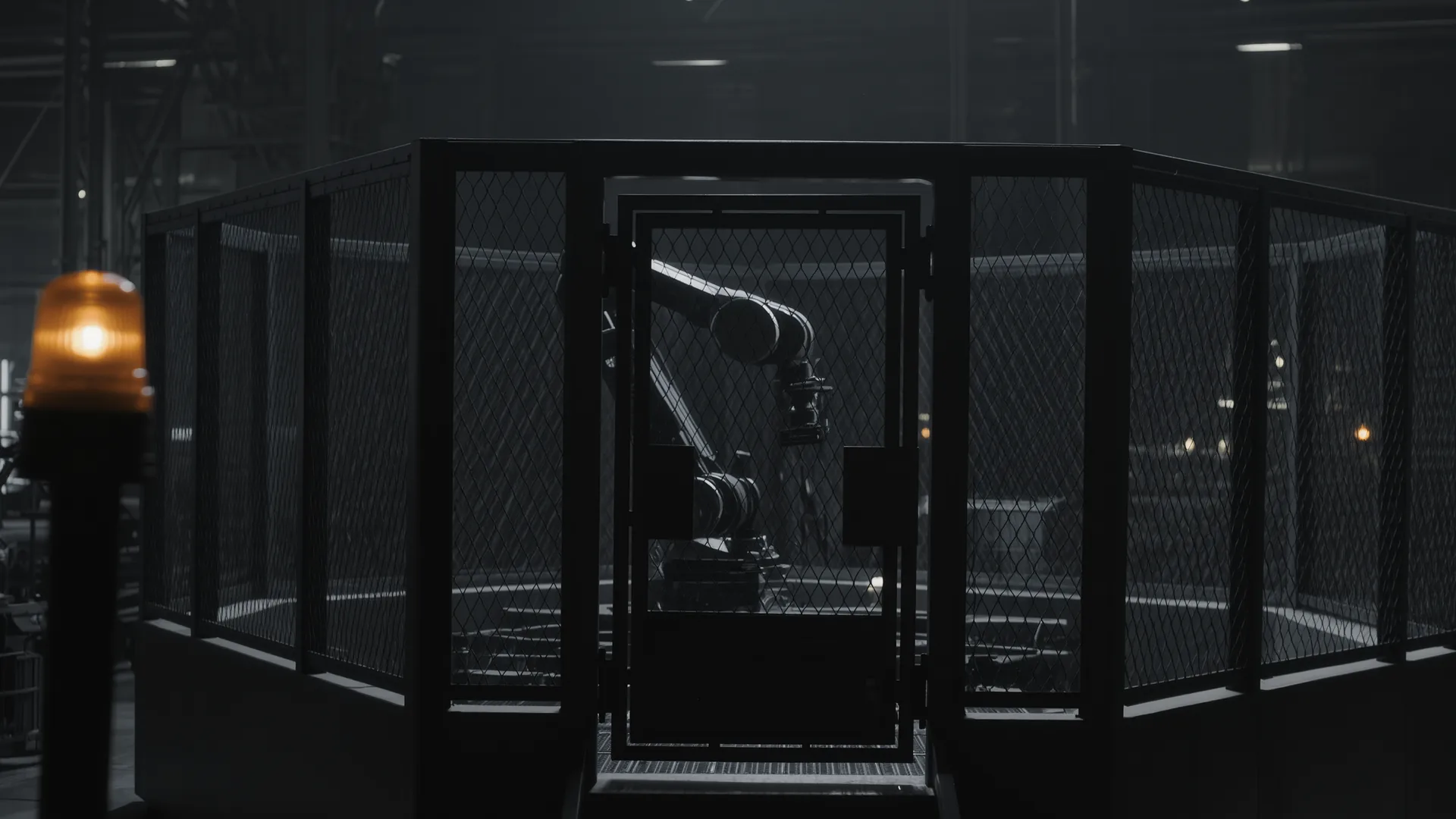
Regulation (EU) 2023/1230 applies to machinery placed on the European market from 20 January 2027. Directive 2006/42/EC applies until 19 January 2027. There is no overlap period in which a manufacturer may choose, so those two consecutive days are a hard switch, and the applicable rule is fixed by the date the machinery is placed on the market rather than by when the project started.
The dates that matter
| Date | Event |
|---|---|
| 29 June 2023 | Published in the Official Journal |
| 19 July 2023 | Entry into force, twenty days after publication |
| 20 January 2024 | Provisions on notified bodies begin to apply |
| 19 January 2027 | Last day machinery may be placed on the market under Directive 2006/42/EC |
| 20 January 2027 | Regulation applies to machinery placed on the market |
What changes for a robot cell
- Digital documentation is allowed. Instructions may be supplied digitally, with a right for the user to request a paper version. For a machine with a substantial manual this removes real cost.
- Software gets explicit treatment. Safety-related software placed on the market independently falls within scope, which matters for robot fleets receiving updates over a network.
- Substantial modification is defined. A modification that creates a new hazard or increases an existing risk can make the modifier the manufacturer of a new machine, with the full obligations that follow. Retrofitting a robot into an existing line frequently falls into this.
- Cybersecurity appears as a safety requirement. Protection against corruption that could lead to a hazardous situation is explicit, which aligns with the corresponding addition to ISO 10218 in 2025.
- Machinery with self-evolving behaviour is addressed, which is the first legislative acknowledgement that learned behaviour needs treatment.
- The high-risk list was revised, changing which machinery requires the involvement of a notified body.
Who has to do what
| Role | Duty |
|---|---|
| Robot manufacturer | Conformity of the robot as partly completed machinery, plus assembly instructions |
| System integrator | Conformity of the complete cell, risk assessment, technical file, declaration, CE marking |
| Importer | Verify that the manufacturer completed the assessment, keep documentation |
| Distributor | Verify marking and documentation are present |
| Operating company modifying a cell | May become the manufacturer of a new machine if the change is substantial |
| Operating company using a cell | Use in accordance with the instructions, maintain the protective measures |
The fifth row catches production engineers regularly. Adding a second robot, changing the process, raising speeds or fitting different tooling can constitute a substantial modification, and the organisation that made the change then carries manufacturer obligations for the result.
What the technical file has to contain
| Document | Purpose | Retention |
|---|---|---|
| Risk assessment | Hazards, measures, residual risk | 10 years |
| General arrangement and circuit drawings | What was built | 10 years |
| Safety function specification and validation | Required performance level and its verification | 10 years |
| Standards applied | Route to compliance | 10 years |
| Component declarations | Robot, scanner, safety controller | 10 years |
| Measurement reports | Stopping distance, contact force where applicable | 10 years |
| Operating instructions | Intended use and foreseeable misuse | with the machine |
| Declaration of conformity | The legal statement | with the machine |
The retention figure is the one most often missed. Documentation has to remain available for ten years after the last unit was placed on the market, which is a records management obligation rather than an engineering one, and it survives staff changes and company reorganisations.
Planning around the switch
- Cells delivered in 2026 may go under the Directive, and the placing on the market date is what counts, not the order date.
- Cells delivered in 2027 must comply with the Regulation. Design work starting now for that delivery window should assess against it.
- Long projects spanning the date are the risk. A cell ordered in 2026 and commissioned in 2027 needs its target rule fixed contractually.
- Templates and technical files need updating for the new documentation and cybersecurity requirements, which is a task with a lead time of its own.
Frequently asked questions
When does the EU Machinery Regulation apply?
To machinery placed on the market from 20 January 2027. Directive 2006/42/EC applies until 19 January 2027, and there is no period in which both are available.
Do existing machines have to be upgraded?
No. The obligations attach to machinery placed on the market. Machines already in service continue under the rules that applied when they were placed on the market, unless they undergo a substantial modification.
What counts as a substantial modification?
A change that creates a new hazard or increases an existing risk. Adding a robot, changing the process, raising speeds or fitting different tooling can all qualify, and the organisation making the change may then carry manufacturer obligations.
Can instructions be supplied digitally?
Yes, under the Regulation, with the user retaining a right to request a paper version. This is a change from the previous practice of supplying printed documentation by default.
Which rule applies to a project spanning the date?
The one in force when the machinery is placed on the market, not when it was ordered or designed. Contracts for cells delivered near the boundary should state the target rule explicitly.
Sources
- Regulation (EU) 2023/1230 on machineryEU-OSHA legislation record, scope, dates and obligations
- The new European Machinery RegulationGerman Federal Institute for Occupational Safety and Health (BAuA), transition and application dates
- ISO 10218-1:2025, Robotics, Safety requirements, Part 1International Organization for Standardization, the technical standard supporting compliance