Field and Service Robotics
Construction Robots: What Actually Works on Site
Layout marking, rebar tying, drilling and surveying are in real commercial use. Bricklaying and 3D printing are not, and the reason is the same in every case.
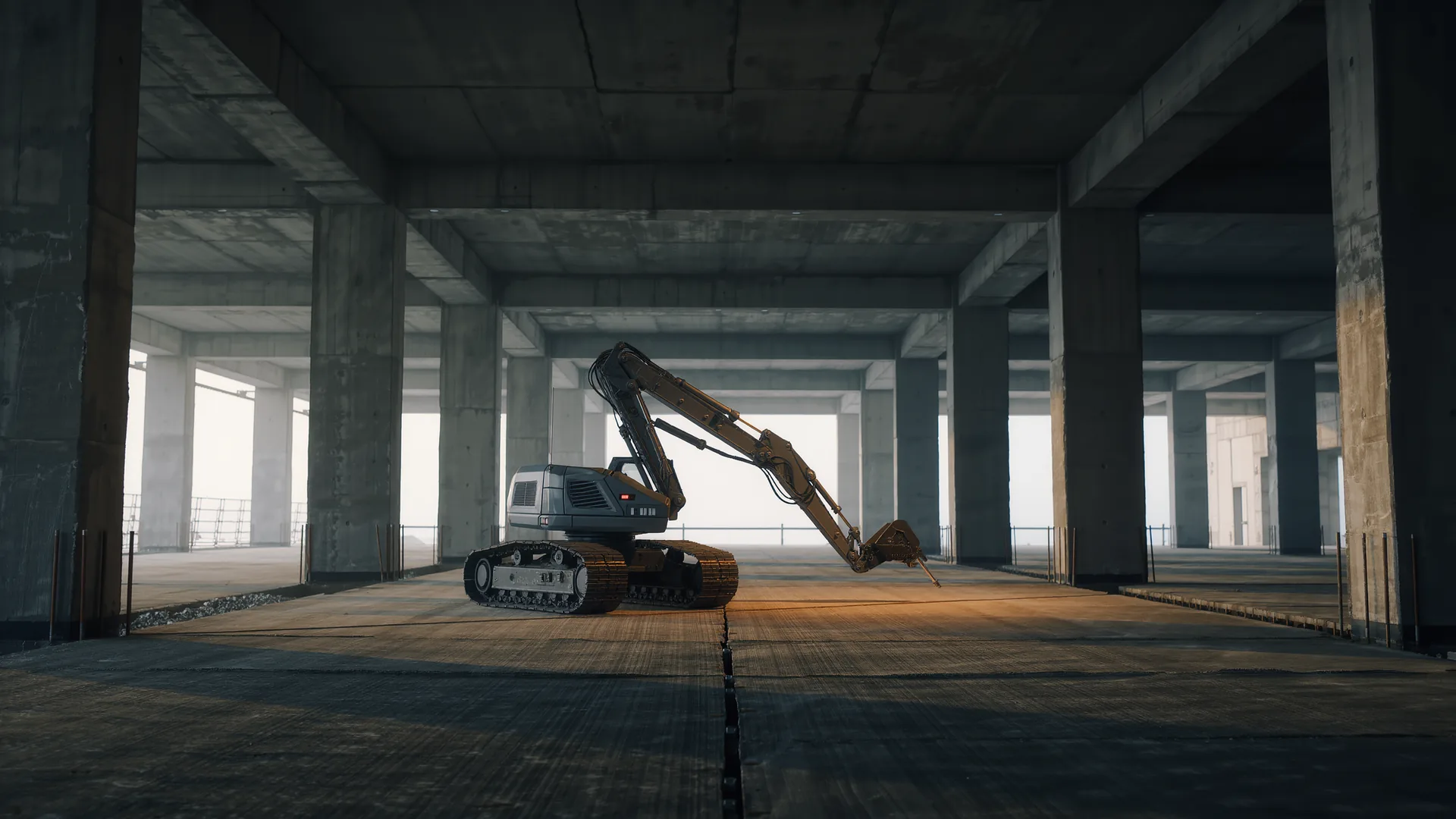
Four construction robots earn money today: layout marking, rebar tying, ceiling drilling and site scanning. What they share is that each replaces a single repetitive task on a flat, finished surface, indoors, with no structural responsibility. Bricklaying, 3D printing and autonomous earthmoving remain demonstrations, and the reason is identical every time: the site is not a factory and the schedule will not wait.
The four that work
| Task | What it replaces | Speed gain | Why it works |
|---|---|---|---|
| Layout marking from the model | Two people with tape and chalk line | 3 to 6x | Flat floor, digital source, no tolerance drama |
| Rebar tying | Stooped manual tying, an injury source | 2 to 4x | Regular grid, repetitive, defined success |
| Ceiling and slab drilling | Overhead drilling from a platform | 2 to 5x | Positions from the model, overhead work is hated |
| Site scanning and progress capture | Manual survey and photo rounds | 5 to 20x | The output is data, no physical risk |
Every one of those sits indoors on a slab, works from a digital model that already exists, performs one narrow task, and carries no structural liability if it stops. Remove any of those four properties and the commercial examples disappear.
What the machines cost and deliver
| Machine | Purchase | Operated hire | Output | Setup per area |
|---|---|---|---|---|
| Layout marking robot | 45,000 to 110,000 | 700 to 1,600 per day | 1,500 to 4,000 m² per day | 20 to 45 min |
| Rebar tying robot | 80,000 to 180,000 | 900 to 2,000 per day | 700 to 1,600 ties per hour | 15 to 30 min |
| Ceiling drilling robot | 150,000 to 350,000 | 1,200 to 2,800 per day | 150 to 400 holes per day | 30 to 60 min |
| Site scanning robot | 90,000 to 220,000 | 600 to 1,500 per day | 3,000 to 12,000 m² per day | 10 to 25 min |
The setup column is where site machines differ from factory ones. A robot that needs 45 minutes of positioning and reference-taking for each area loses most of its advantage on a floor plate divided into 12 small rooms, and keeps all of it on an open 3,000 m² deck. Floor plate geometry, not machine speed, decides the daily output.
Why the famous ones do not
- Bricklaying. The machine lays faster than a bricklayer in a straight run, and a wall is not a straight run. Openings, corners, services, courses that must meet a datum, and a mason who adjusts continuously to a structure that is never quite where the drawing says. Setup and reset time eats the speed advantage.
- Concrete 3D printing. Prints walls impressively, and a building is not walls. Foundations, reinforcement, services, openings, insulation, roof and finishes are unchanged, so the printed element is a minority of the cost and a majority of the regulatory novelty.
- Autonomous earthmoving. Genuinely close, and constrained by the site rather than the machine: unmapped services, changing ground conditions, other plant moving unpredictably, and a safety framework built around a person in a cab.
- Humanoids on site. The environment argument is strongest here and the readiness is weakest. Uneven ground, debris, weather, dust and two-hour battery life meet a schedule measured in weeks.
The pattern that predicts success
| Question | Works if | Fails if |
|---|---|---|
| Is the surface flat and finished? | Slab, deck, floor | Excavation, muck, slope |
| Is it indoors or weather-protected? | After the envelope closes | Open frame in winter |
| Does a digital model already exist? | Model-driven positions | Positions decided on site |
| Is the task one thing, repeated? | Mark, drill, tie, scan | Assemble, finish, adapt |
| Does failure stop other trades? | No, work can proceed | Yes, it is on the critical path |
| Who signs for the structure? | Nobody, it is preparation | The robot's output is structural |
The last row is the quiet one. Construction is a liability business. A machine whose output must be signed off by an engineer introduces a question nobody in the chain wants to answer, and that alone has held back more automation than any technical limit.
The economics on site
Construction robots are almost always rented rather than bought, and for good reason: a contractor needs the machine for the six weeks of a slab package, not for a year. Rental with an operator, sometimes called an operated hire, is the dominant model, and it prices the technology as a subcontract rather than as capital.
That structure also explains the adoption curve. A subcontractor comparing an operated hire against a two-person crew for six weeks makes a decision in an afternoon. A contractor comparing a capital purchase against a fluctuating annual workload never does.
Frequently asked questions
Which construction robots are actually in use?
Layout marking from the digital model, rebar tying, ceiling and slab drilling, and site scanning for progress capture. All four work indoors on a finished floor, perform one repetitive task and carry no structural responsibility.
Why has bricklaying automation not taken over?
Because a wall is not a straight run. Openings, corners, services and datum-matching courses require continuous adjustment, and setup plus reset time consumes the speed advantage the machine has on the straight sections.
Is concrete 3D printing commercial?
For walls in specific projects, yes. For buildings, no. Foundations, reinforcement, services, openings, insulation, roof and finishes are unchanged, so the printed element is a minority of cost and a majority of the approval difficulty.
What stops robots on site more than anything?
Availability rather than capability. A stopped machine blocks trades whose sequence is already booked, so a simple robot that always works beats a capable one that sometimes does not.
Are construction robots bought or rented?
Almost always rented, frequently with an operator. A contractor needs the machine for a six-week package rather than a year, and operated hire prices it as a subcontract rather than as capital.
Sources
- World Robotics 2025 report, service robotsInternational Federation of Robotics, construction as a service robot segment
- ISO 3691-4, safety requirements for driverless industrial trucksInternational Organization for Standardization, the framework applied to mobile site machines
- Regulation (EU) 2023/1230 on machineryEU-OSHA, conformity obligations for machinery placed on the market