Field and Service Robotics
Drones vs Crawlers for Asset Inspection
A drone reaches anything in 20 minutes and touches nothing. A crawler takes hours and can measure wall thickness. The choice is set by whether the inspection needs contact.
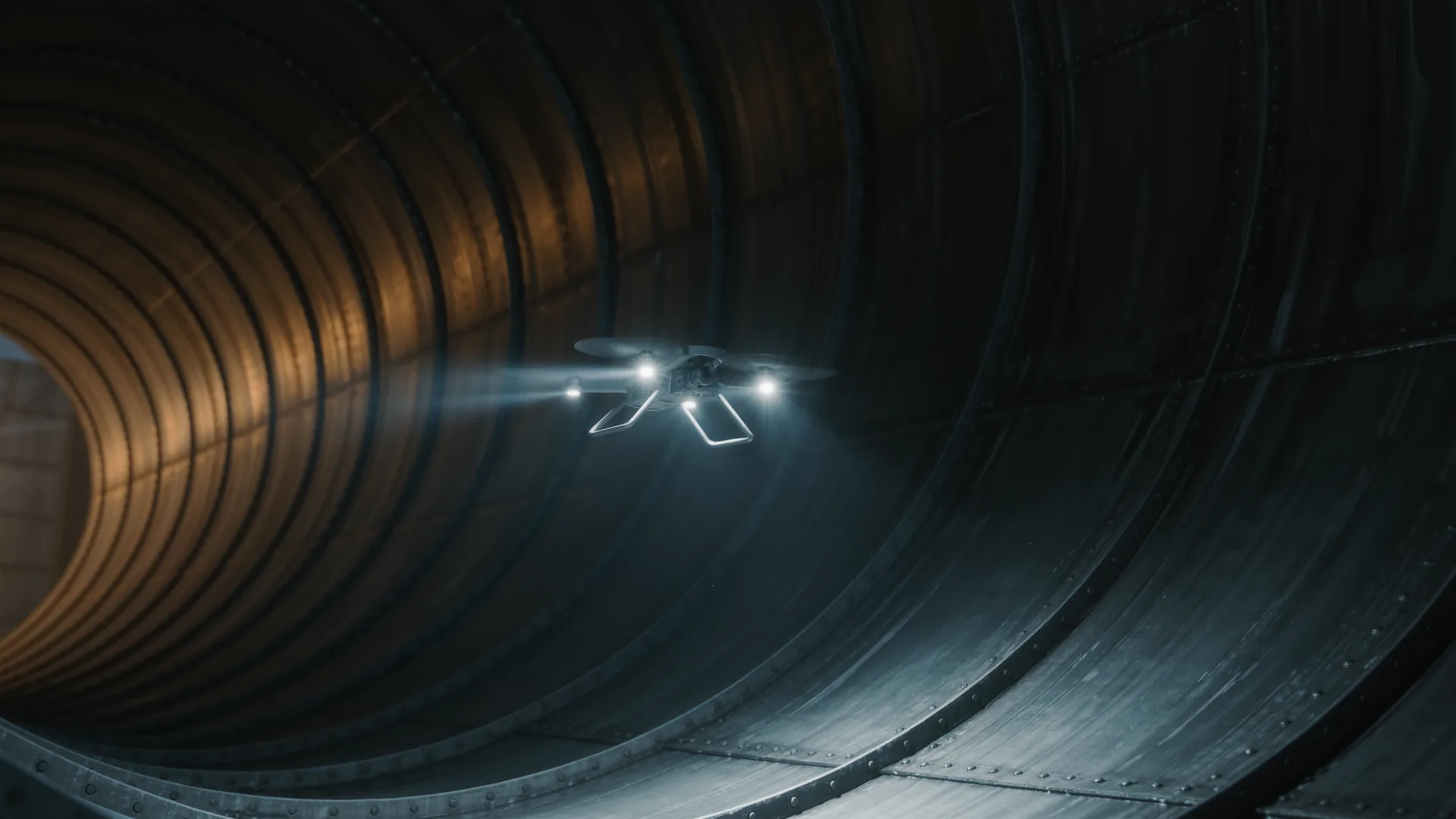
One question settles it: does the measurement require contact. Visual inspection, thermography and gas detection are non-contact, and a drone covers a flare stack or a tank roof in 15 to 30 minutes that would otherwise need scaffolding. Ultrasonic wall thickness needs a probe pressed against steel with couplant, and only a crawler does that, at 4 to 20 readings per hour against a rope technician's 20 to 60.
The three platform types
| Platform | Endurance | Reaches | Can measure | Weakness |
|---|---|---|---|---|
| Free-flying drone | 20 to 45 min | Anything with line of sight | Visual, thermal, gas, methane | No contact, wind, confined space rules |
| Caged drone, confined space | 10 to 25 min | Tank and vessel interiors | Visual, thermal | Short endurance, no contact |
| Contact-capable drone | 10 to 20 min | Vertical surfaces at height | Ultrasonic thickness, limited | Very short endurance, surface prep |
| Magnetic wheel crawler | 2 to 8 h | Ferrous vertical and overhead surfaces | Ultrasonic, visual, coating | Slow, tether, needs ferrous steel |
| Ground crawler or quadruped | 1 to 8 h | Walkable plant routes | Visual, thermal, gas, acoustic | Cannot leave the floor |
| Submersible crawler | 4 to 12 h | Tank interiors while in service | Ultrasonic, visual | Product compatibility, retrieval |
Which one, by inspection type
| Inspection | Contact needed | Platform |
|---|---|---|
| General visual, external structure | No | Drone |
| Coating and corrosion survey | No | Drone, high resolution |
| Thermographic survey of electrical plant | No | Ground robot or drone |
| Methane and gas leak survey | No | Drone with a laser detector |
| Ultrasonic wall thickness | Yes | Magnetic crawler |
| Weld inspection | Yes | Crawler with a positioning frame |
| Confined space vessel interior, general visual | No | Caged drone |
| Tank floor while in service | Yes | Submersible crawler |
| Routine plant round, many readings | No | Ground robot or quadruped |
What a survey costs
| Method | Access cost | Inspection cost | Asset downtime |
|---|---|---|---|
| Scaffold plus rope-free manual inspection | 15,000 to 90,000 | 3,000 to 12,000 | 3 to 14 days |
| Rope access technicians | 2,000 to 8,000 | 4,000 to 15,000 | 1 to 4 days |
| Drone visual survey | 0 | 2,500 to 9,000 | 0 to 1 day |
| Crawler ultrasonic campaign | 0 to 3,000 | 6,000 to 25,000 | 1 to 5 days |
| Submersible tank crawler, in service | 0 | 20,000 to 70,000 | 0 |
The last row is the strongest economic case in the whole table and the least discussed. Inspecting a tank floor without emptying, cleaning, gas-freeing and re-certifying the tank removes an outage that can run into weeks, and the inspection cost stops being the number that matters.
The rules are the constraint, not the robot
- Airspace. Flying near infrastructure needs permissions that vary by country and by site, and industrial sites frequently sit near controlled airspace.
- Confined space entry. Sending a machine into a vessel does not automatically remove the confined space regime, and the rescue plan for a stuck robot is a real document.
- Explosive atmospheres. Classified zones require certified equipment, which narrows the field to a handful of platforms before any capability question is asked.
- Inspection body acceptance. A wall thickness reading is only useful if the certifying body accepts the method and the operator qualification. This is settled with the inspection authority before the survey, not after.
- Data handling. High-resolution imagery of a plant is sensitive, and where it is stored and processed is a security question on many sites.
The fourth point is the one that most often wastes money. A survey that produces beautiful data the certifying body will not accept has cost the full price and delivered nothing, and it is entirely avoidable by asking first.
Frequently asked questions
Drone or crawler for asset inspection?
Drone for anything non-contact: visual, thermal, gas and coating surveys. Crawler for anything requiring a probe on the surface, above all ultrasonic wall thickness and weld inspection.
Where does the money actually come from?
Avoided scaffolding and avoided downtime rather than inspection labour. Scaffold access to a flare tip or tank roof often costs more than the inspection itself and takes days during which the asset may be out of service.
How long can these platforms work?
Drones fly 20 to 45 minutes, less in caged confined-space versions. Crawlers run 2 to 8 hours, and submersible crawlers 4 to 12, because they carry or receive more power and do not fight gravity.
Can a drone measure wall thickness?
Contact-capable drones exist and can take ultrasonic readings, at short endurance and with surface preparation constraints. For any survey requiring many readings, a magnetic crawler remains the practical choice.
What is the most expensive mistake?
Commissioning a survey the certifying body will not accept. Method and operator qualification should be agreed with the inspection authority before the work, not presented afterwards.
Sources
- World Robotics 2025 report, service robotsInternational Federation of Robotics, inspection and maintenance segment
- ISO 3691-4, safety requirements for driverless industrial trucksInternational Organization for Standardization, applies to ground inspection platforms
- Robotics at NISTNational Institute of Standards and Technology, test methods for response and inspection robots